Personal Essay: Finding Magic with Miyazaki
At my daughter Judy’s 12-month checkup, I held my squirming, wild-haired baby on my lap while our pediatrician, Dr. Mason, looked in her ears with her black otoscope. I tried to distract Judy with the board book we brought with us, Slinky Malinki.
“A book!” Dr. Mason said, “Do you like books, Judy?”
Judy ignored the question and continued to try to wriggle out of my arms and away from the otoscope.
“Yeah, we read a lot of books to her at home. We’ve been really diligent about avoiding screens,” I said, “Except for a few FaceTime calls with family in Ohio, Michigan and Tennessee.”
Dr. Mason was impressed.
“That’s great,” she said, “At this age, I always say it’s best if you can keep limiting screens as much as you can. Then, at age three, if you’re ready to start movies, start with My Neighbor Totoro. It’s slow, and nothing really happens—it’s perfect for toddlers. I love Miyazaki films. I can print out my list of recommendations by age group, if you’d like.”
I nodded. “That’d be great. Thanks.”
That Christmas, I bought two copies of My Neighbor Totoro on DVD—one for my niece, who had just turned three, and one for Judy. I tossed our copy into the cupboard of DVDs in the living room, still shrink-wrapped.
I won’t need this for another year and a half.
A few weeks after my daughter turned two, my husband and I got really sick. We weren’t sure if it was a virus or a foodborne illness we picked up from the steak and eggs we shared at a local breakfast spot to celebrate our wedding anniversary. So we told my parents and our part-time nanny to stay away and stay safe until we were through it. Navigating parenting while feverish and throwing up, tired as hell, and with full-body cramps was tough.
“We gotta put something on the TV,” my husband said, “Judy’s losing her mind and we can’t take her to the park.”
“Totoro?” I suggested.
“Perfect.”
So much for waiting until Judy was three. I took the DVD out of its shrink-wrap, wadding up the crinkly clear plastic and putting it in my pajama pants pocket. The trash can was too far away.
For two days in a row, while we slowly recovered, we watched My Neighbor Totoro three times each day. I’d never seen it before, and I fell so deeply in love with this film. Dr. Mason was right—it’s deliciously slow, taking plenty of time for world-building and lingering in the glimmers.
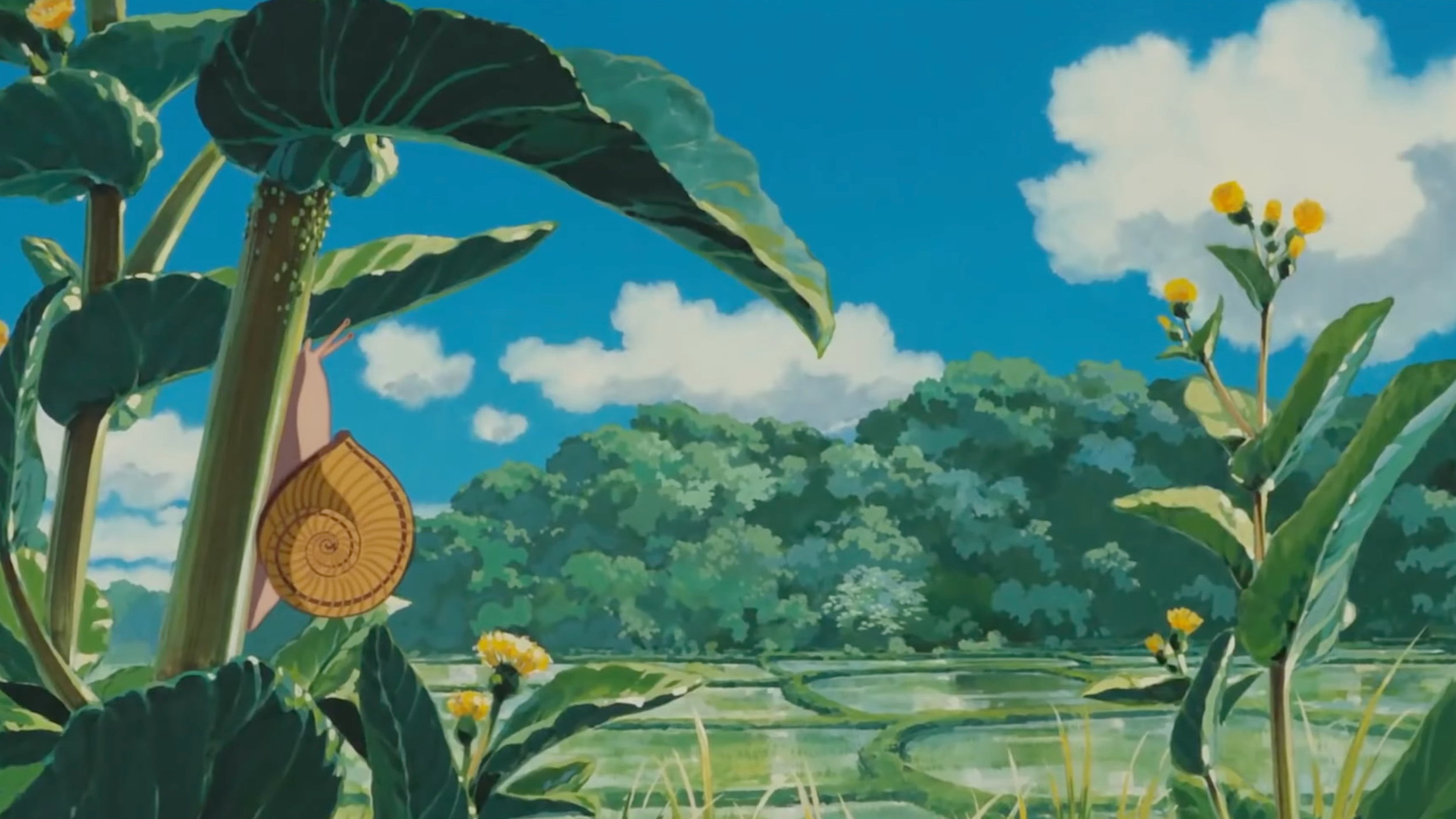
Slow, gorgeous, cinematic world-building, My Neighbor Totoro, 1988
The story follows two young girls, Satsuki and Mei Kusakabe, who move to rural 1950s Japan with their father, Tatsuo, a university professor. Their mother, Yasuko, is recovering from a long-term illness—speculatively, Tuberculosis, although it’s never mentioned by name— in a nearby hospital. The Kusakabe family hopes their new life away from the city will continue to help Yasuko heal, once she’s well enough to come home.
Beautiful scenes of everyday life meander throughout. Preparing and cooking meals. Bathing. Harvesting garden vegetables. Going to school. Getting caught in rainstorms. These vignettes put me at ease and helped me soften into Satsuki’s and Mei’s new world.
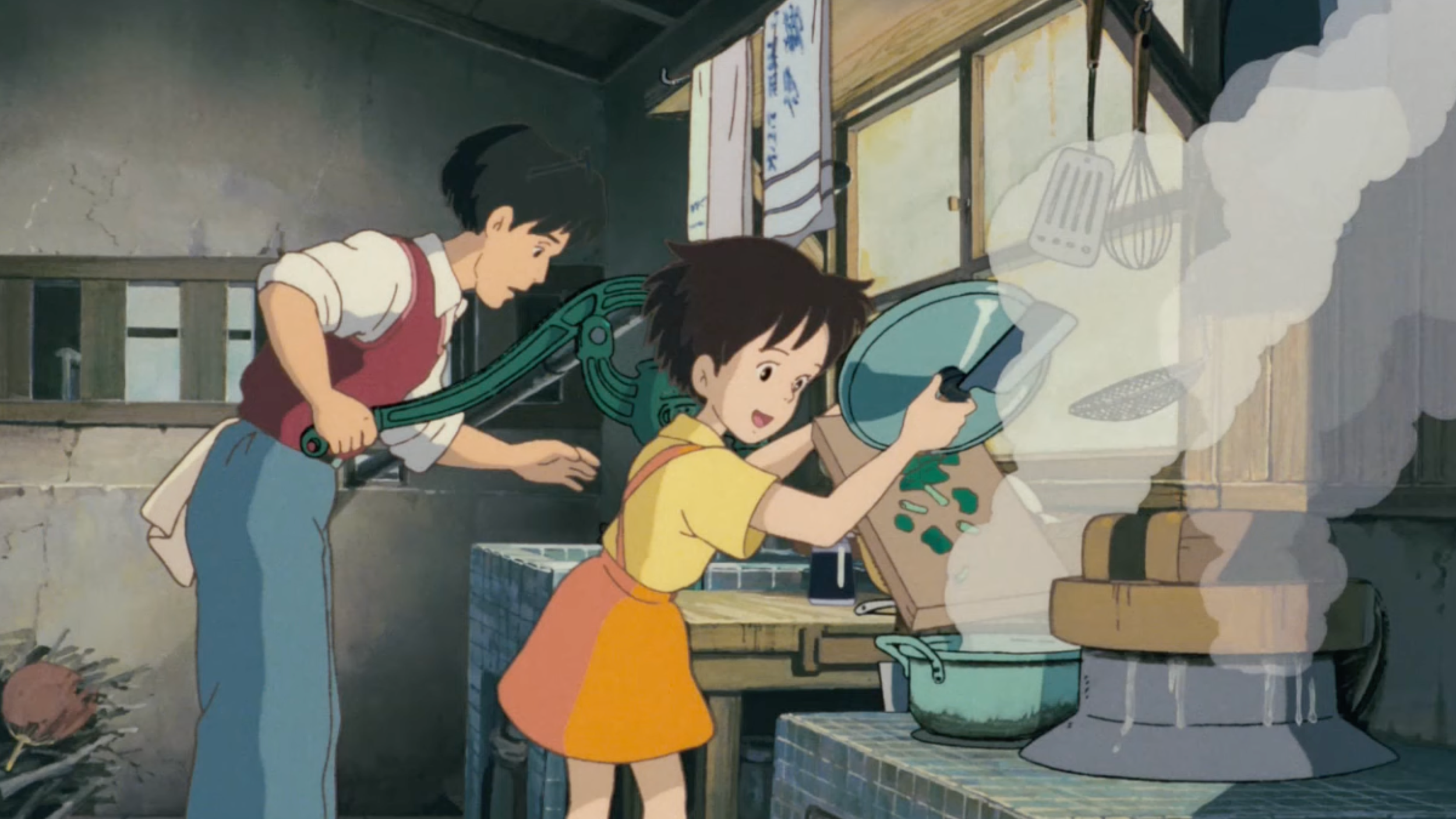
Tatsuo (Dad) and Satsuki cook in the kitchen, My Neighor Totoro, 1988
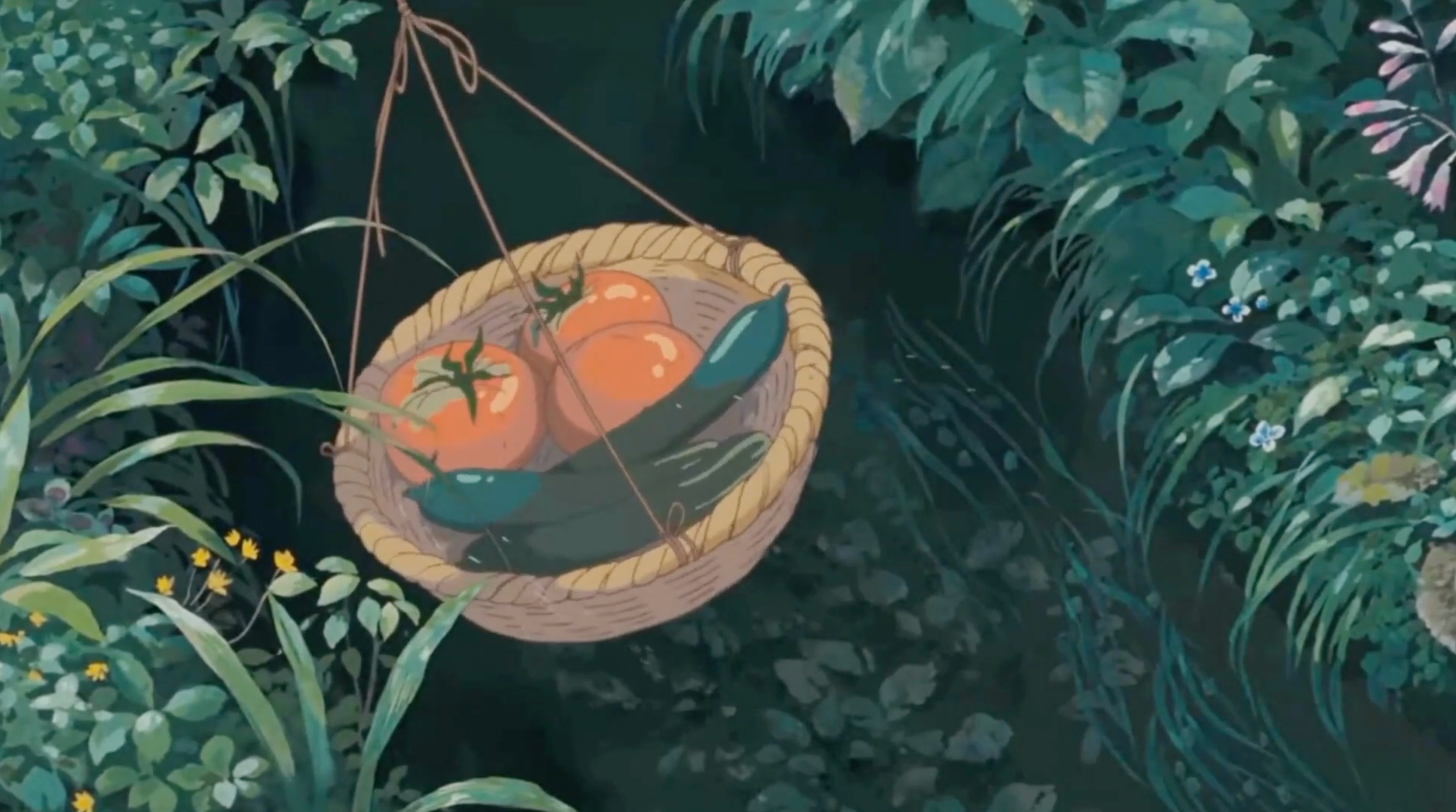
Vegetables from Granny’s garden cool in the creek, My Neighbor Totoro, 1988
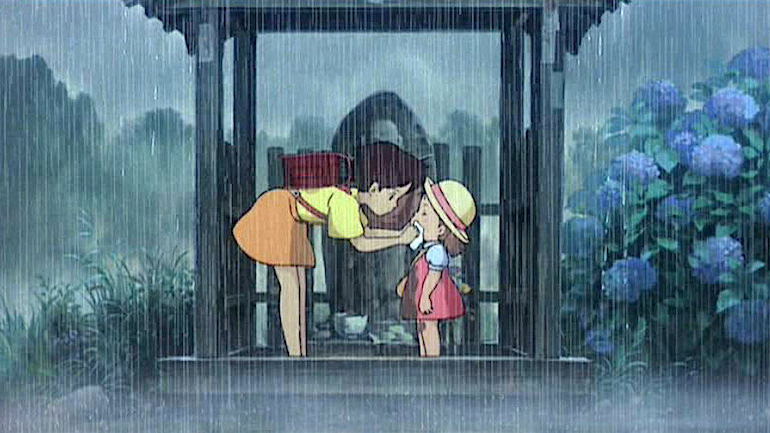
Satsuki and Mei caught in a rainstorm after school, My Neighbor Totoro, 1988
The otherworldly magic begins when the girls start seeing and interacting with nature spirits. Soot sprites in the bathroom and attic. Totoro, the forest spirit who lives in the massive Camphor tree in their yard. And the large, grinning, roaming Catbus—a magical form of transportation with twelve legs and a big, bushy tail.
One of the things that really struck me was this—the film doesn’t shy away from how much the girls worry about their mother. How it’s been hard to be away from her for so long. While they receive a lot of support from their gentle, loving father and their new neighbors, I love how the nature spirits step in to help the girls on a spiritual level, providing a much-needed sense of wonder and renewed faith in the universe.
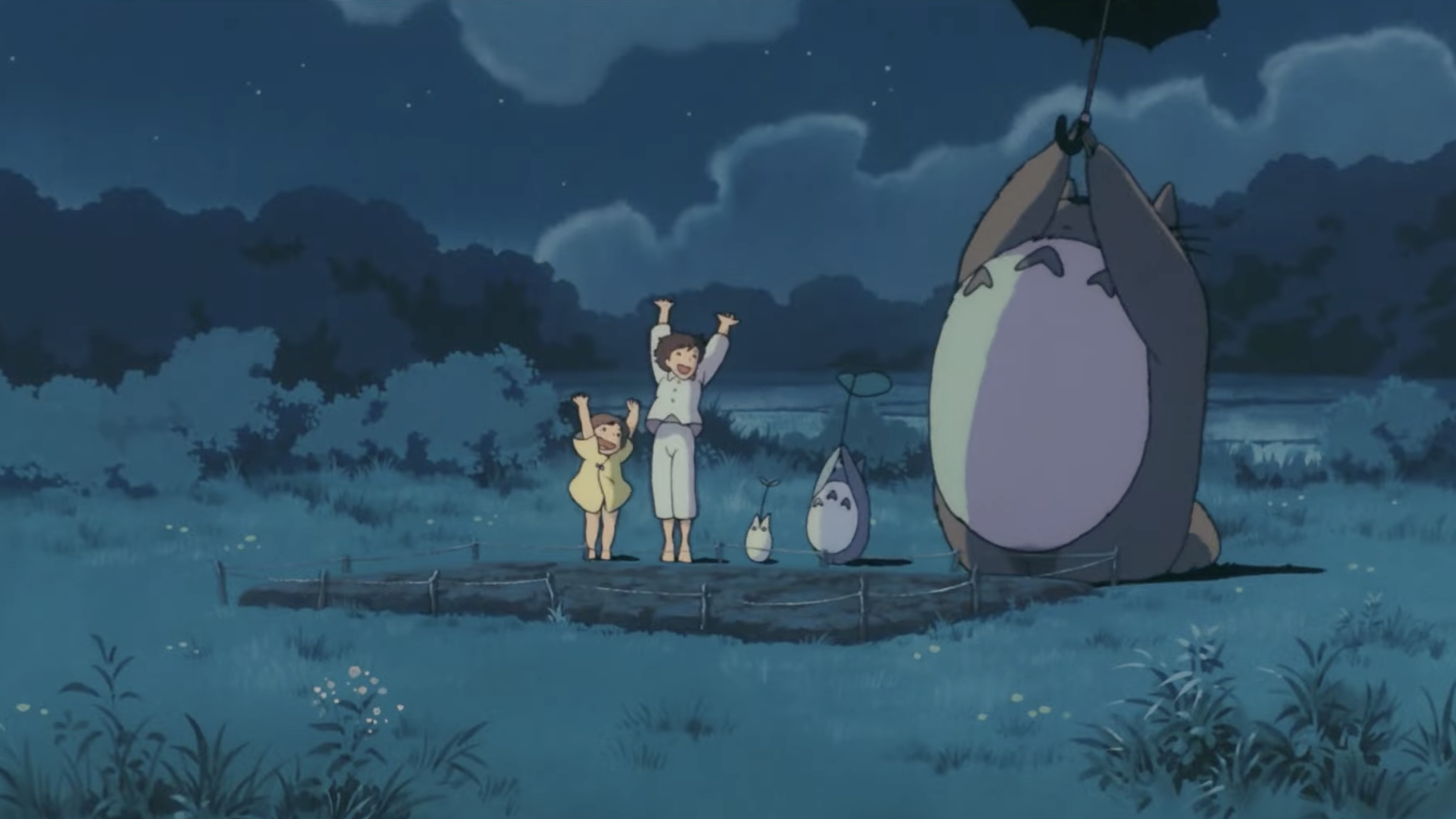
Totoro provides some much-needed sense of wonder and renewed faith in the universe to Satsuki and Mei, My Neighbor Totoro, 1988
After my husband and I recovered, I kept thinking about My Neighbor Totoro. My family is in a season of life that is equal parts beautiful and incredibly hard. Two parents working full-time. A spirited toddler with a lot of energy who still doesn’t sleep through the night. A grown-up kid in her senior year of college. Never-ending laundry, dishes, and piles of dog hair everywhere. An old house, yard, and garden to take care of. Most days feel like a race from the moment we open our eyes in the morning until the moment our heads hit the pillow at night, with no time to rest our bodies or replenish our spirits. I know it won’t always be like this, and that I will miss so much of it when it’s over. Watching My Neighbor Totoro six times in a row made me ask myself: How can I find the magic, savor the mundane, and discover the magnificent in everyday life?
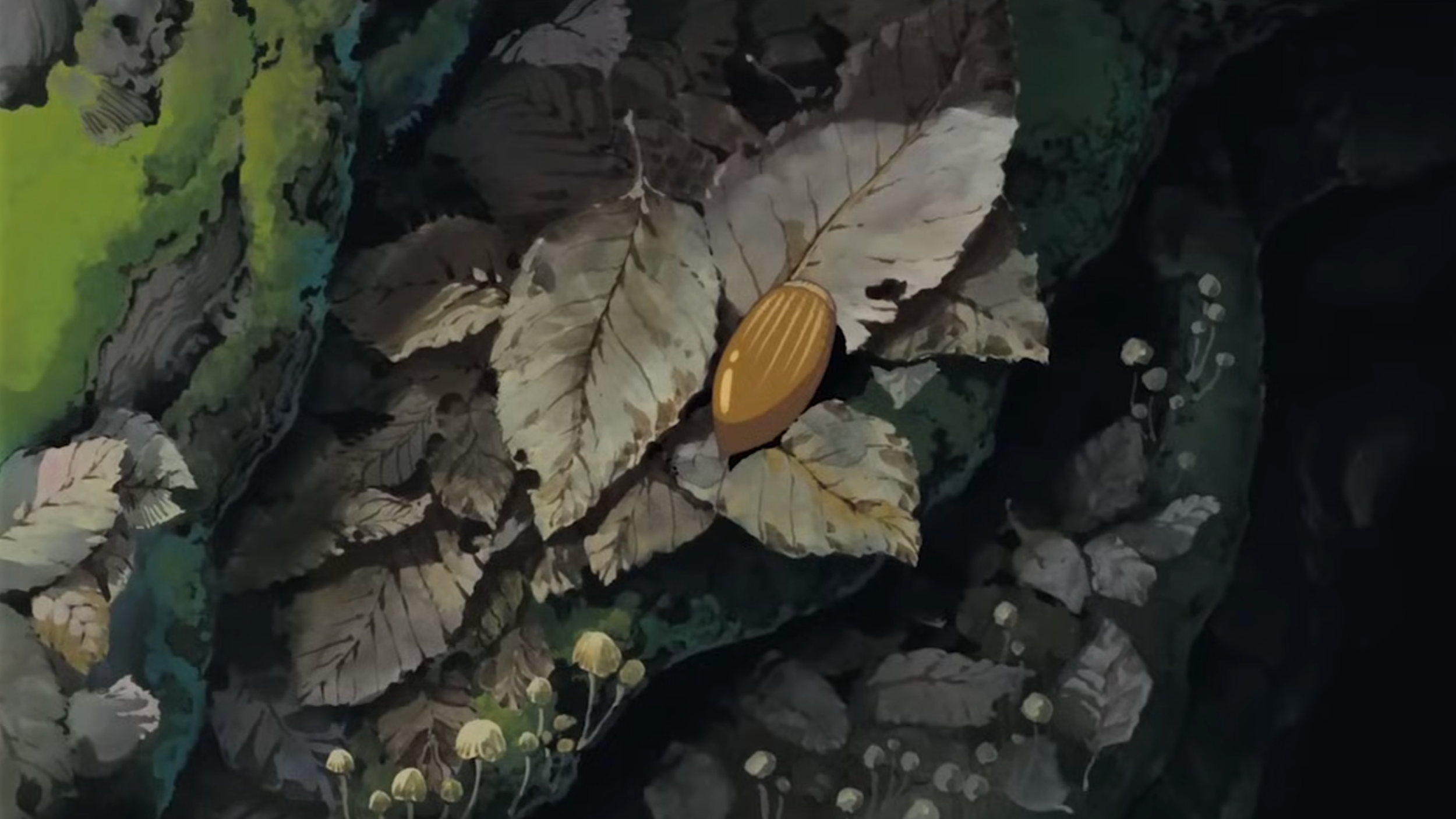
One of Totoro’s Acorns, My Neighbor Totoro, 1988
While Judy enjoyed 5 minutes of Ms. Rachel on YouTube Kids—hard-earned for using the potty—I sat on my front porch, door wide open so I could keep an eye and ear on her. I held a hot cup of peppermint tea in my favorite orange mug and looked up at the horizon, past the rooftops of my neighbors’ houses. My eyes landed on a large Deodar Cedar tree. I recognized the large green egg-shaped cones that grow upward from the limbs, rather than downward like those of other conifers. I remembered how my friend, Bob, once said, “They look like little owls sitting on the branches.”
My Neighbor Deodar Cedar grew so many cones, its branches drooped proudly with bounty. I inhaled the swirling, minty steam drifting up from my cup and took a sip of tea. As the warmth cascaded down my ribcage and nestled softly in my belly, I decided that all these little owl cone spirits are always watching over my family and me. Each one represents a piece of good luck heading our way. And soon. I thanked them the same way Tatsuo taught Satsuki and Mei to thank Totoro, and walked back inside the house. Just in time, too. The built-in timer on YouTube Kids was going off, and Judy ran up to me to hand my phone back, “’Ere you go, mama!”
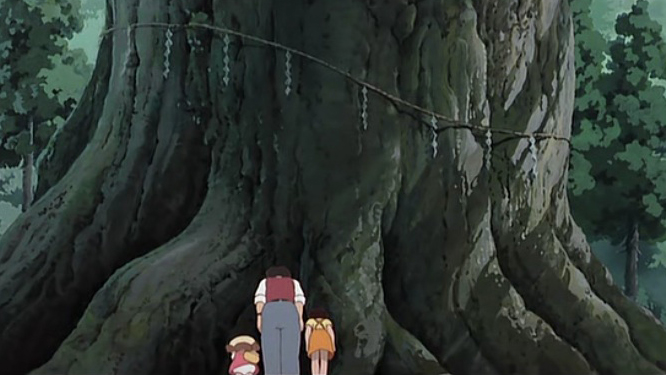
Mei, Tatsuo (Dad) and Satsuki give the Camphor tree a proper greeting and thank Totoro for looking after their family, My Neighbor Totoro, 1988
That same day, I bought a set of soot sprite dryer balls on the internet—a little bit of magic for an everyday chore—and smiled to myself when I thought about how I would let Judy find them hidden between the clean bath towels and socks in the dryer, when she helped me toss clean laundry into the basket. I could already hear her little voice say, “So cute!” the same way she says it when we watch the soot sprites first appear to Satsuki and Mei.
I adopted a mantra of don’t move faster than you can feel that I come back to again and again, the way many people come back to the breath. Then I witnessed what happened when I committed to the practice of slowing down.
I melted into the present moment, warm and satisfied.
I savored the feeling of Judy’s head and body relaxing into mine as I read her a stack of picture books on our old, black corduroy couch. I caught the awe in her eyes as we blew shiny, rainbow-hued bubbles in our backyard, lingering in the moment just a few seconds longer than usual, and allowing that awe to land in my chest, yellow-gold and shimmering. When I woke up in the middle of the night to turn over or kick my leg out of the layers of blankets on the bed, I took a few extra moments to listen to any messages from the wind rustling outside, and to look at my husband’s sweet, handsome face sleeping on the pillow next to mine. I drifted back to sleep feeling lucky and alive.
I hope by conjuring up these small acts of mundane magic, I’ve opened an invisible door to the divine. That this boon continues to unfold and find me. Return me, over and over again, to a practice of slowing down. Savoring the mundane. Discovering the magnificent. I don’t want to rush past any details, these glimmering micro-moments in my world, that are ready to fill me with a sense of wonder and support from the universe.
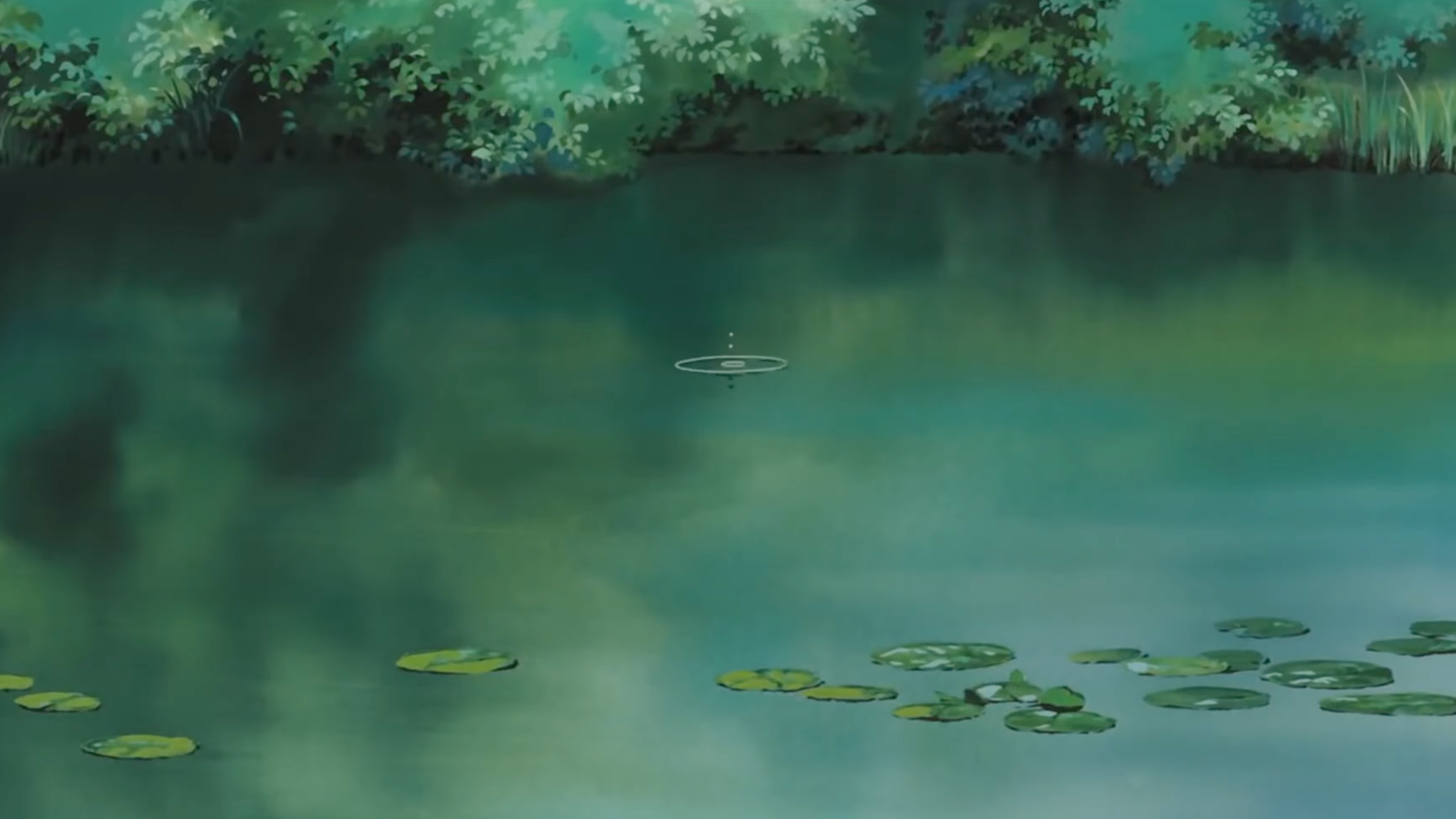
Quiet pond, My Neighbor Totoro, 1988
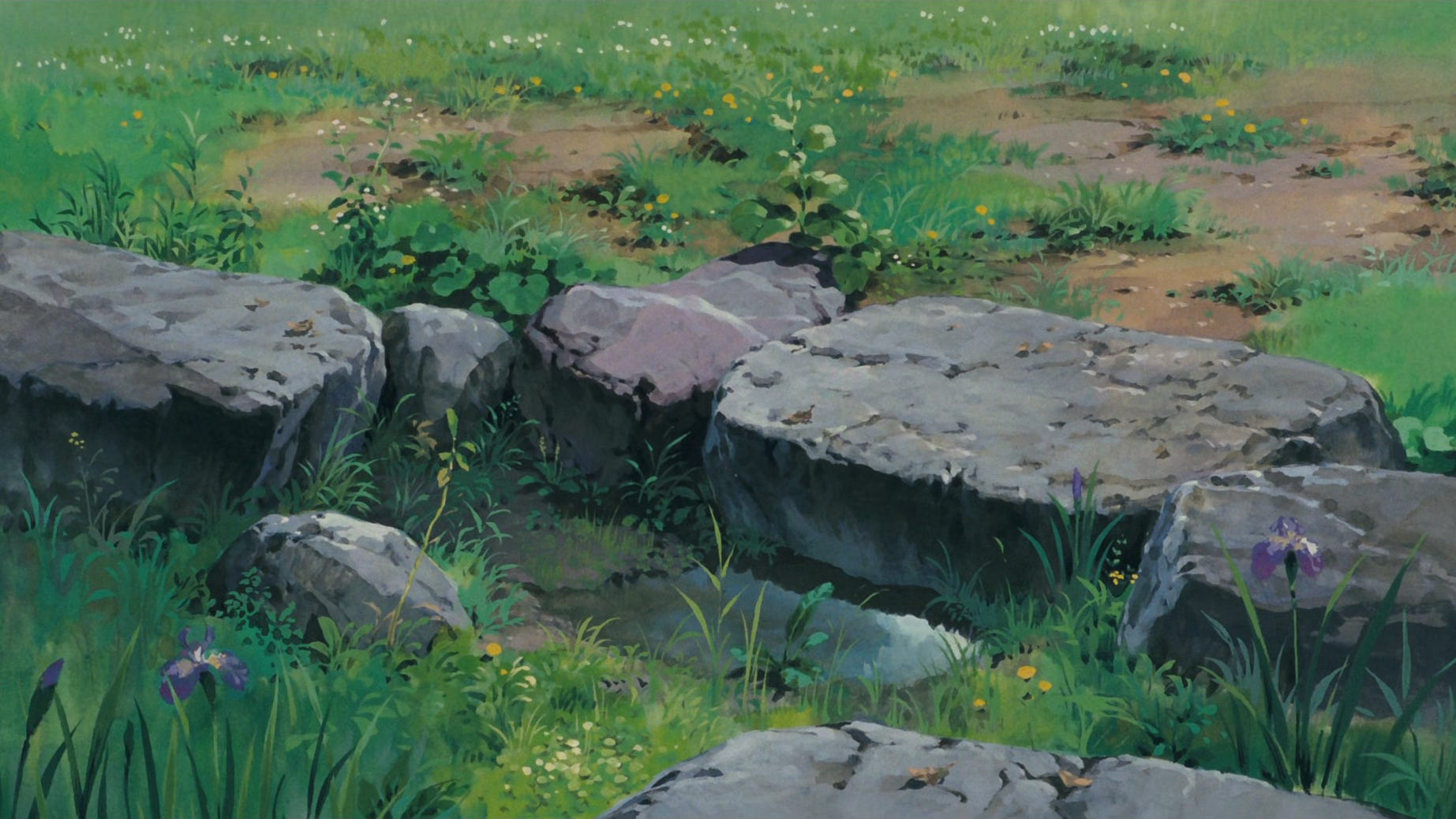
Irises and stones in the yard, My Neighbor Totoro, 1988

Sunset, My Neighbor Totoro, 1988

A toad at the rainy bus stop, My Neighbor Totoro, 1988